PowerPod 600
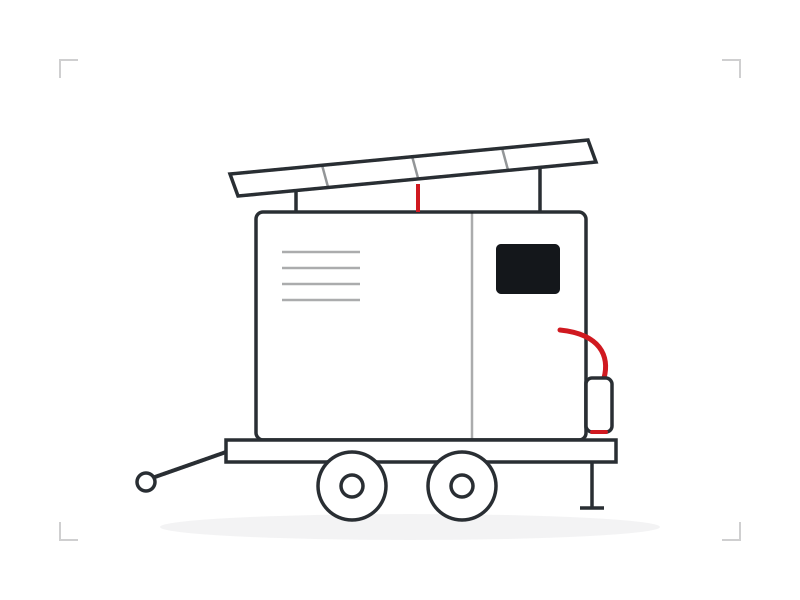
Towable 600 kVA hybrid microgrid: battery energy storage (BESS), a 100 kW solar canopy, and low-emission propane generation with a 300 kW DC fast charger.
ExploreVector packages 300 to 600 kW of dual-port DC fast charging onto a towable platform. It is designed to bridge the 12–24 months utility substation upgrades typically take, generates up to 100 kW of localized solar offset, and runs connected operations from day one.
Towable dual-port DC fast charging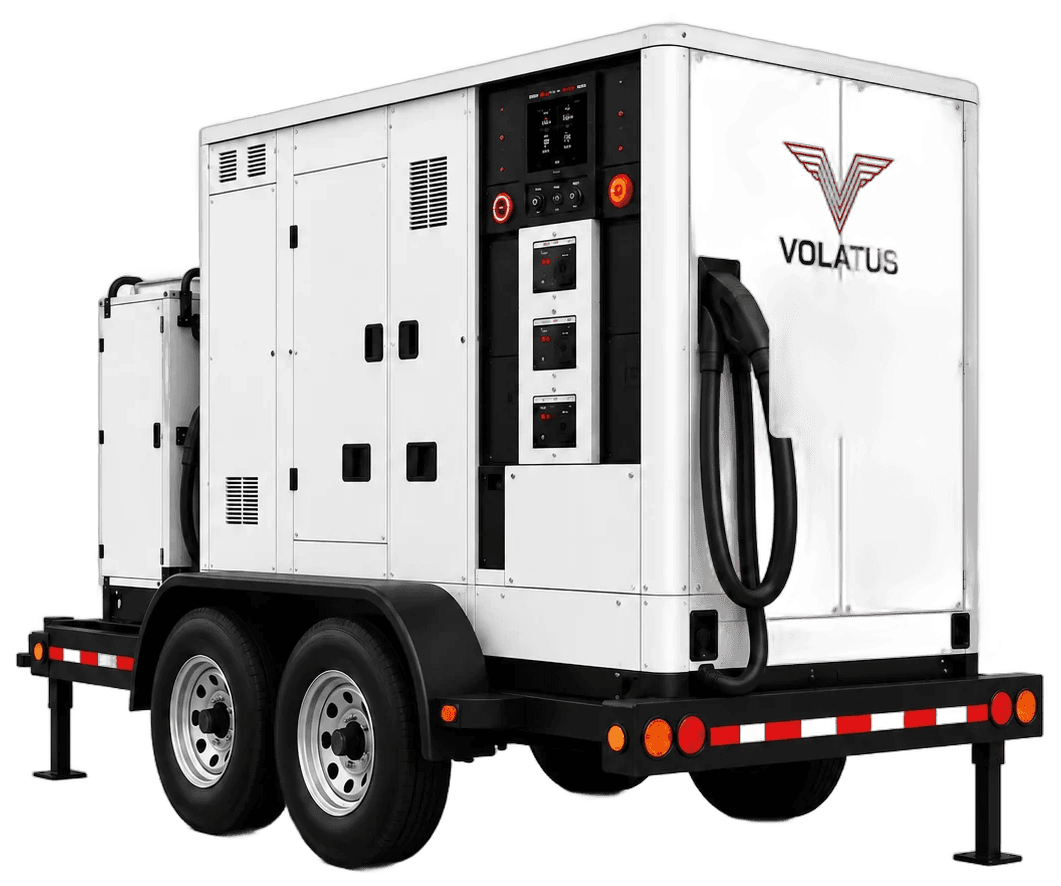
Vector turns high-power DC charging into a rapidly deployable asset. Fleets charge immediately while permanent infrastructure catches up, and the same unit moves wherever demand goes next.
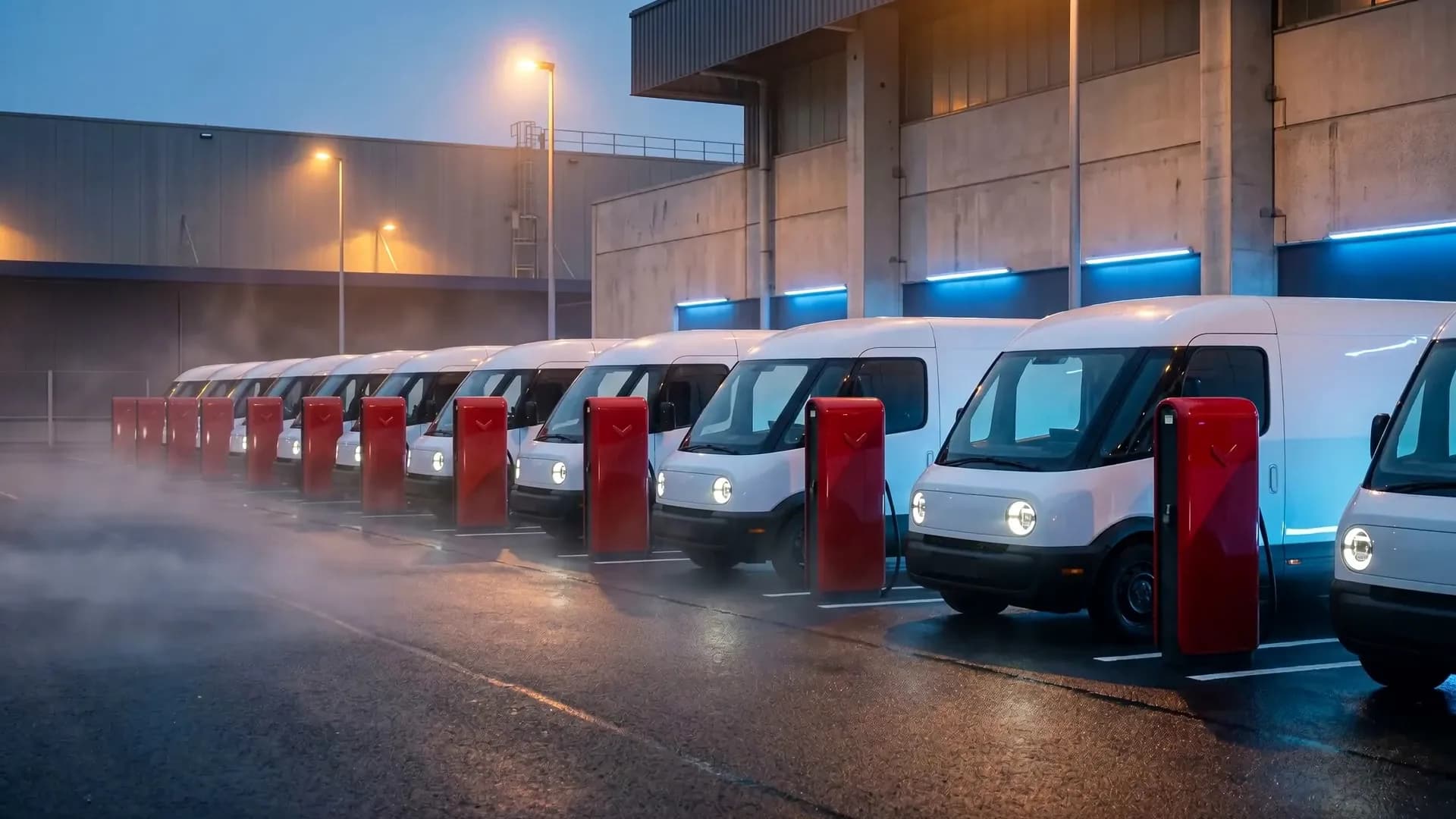
Fleets that need charging before permanent infrastructure is complete
Operations where the point of demand moves
Sites bridging toward a PowerHub permanent architecture
Specifications reflect current Volatus product documentation (July 2026); final values are confirmed during project configuration.
| Output range | 300–600 kW dual-port output |
|---|---|
| Energy source | Deployment-configured: onboard energy storage with utility-supplement options; storage capacity sized per project |
| Power behavior | Dynamic intelligent load balancing |
| Renewable offset | Generates up to 100 kW of localized solar offset energy |
| Reliability | Engineered toward a 99% uptime target with industrial-grade components |
| Format | Road-transportable trailer platform |
|---|---|
| Schedule | Designed to bridge the 12–24 months substation upgrades typically take |
| Placement | Temporary or semi-permanent operating area |
| Redeployment | Designed for changing points of demand |
| Connectors | CCS1 (Combined Charging System) + NACS (North American Charging Standard) |
|---|---|
| Additional interfaces | Configured per program |
| Operator interface | Touchscreen with RFID, app, and QR options |
| Connectivity | Meridian Cloud real-time tracking, monitoring, and optimization |
| Cooling | Active liquid cooling |
|---|---|
| Duty profile | Designed for outdoor deployment across changing sites |
| Ratings | Environmental and acoustic ratings confirmed during project configuration |
| Availability | Built to order; configuration confirmed during project scoping |
Vector is designed to bridge the 12–24 months utility substation upgrades typically take. It delivers 300 to 600 kW of dual-port output wherever the operation needs it.
The energy source depends on the deployment. Vector runs from onboard energy storage, can supplement utility connections, and generates up to 100 kW of localized solar offset energy; storage capacity is sized during project configuration. For fully off-grid hybrid generation, it pairs with PowerPod 600.
Yes. Fleets charge immediately on Vector while the permanent PowerHub architecture is designed, permitted, and built.
It is designed for land logistics fleets, aviation terminals, and maritime port harbors, plus emergency backup and transient fleet deployments where power has to arrive on a schedule the grid can't meet.
Towable 600 kVA hybrid microgrid: battery energy storage (BESS), a 100 kW solar canopy, and low-emission propane generation with a 300 kW DC fast charger.
Explore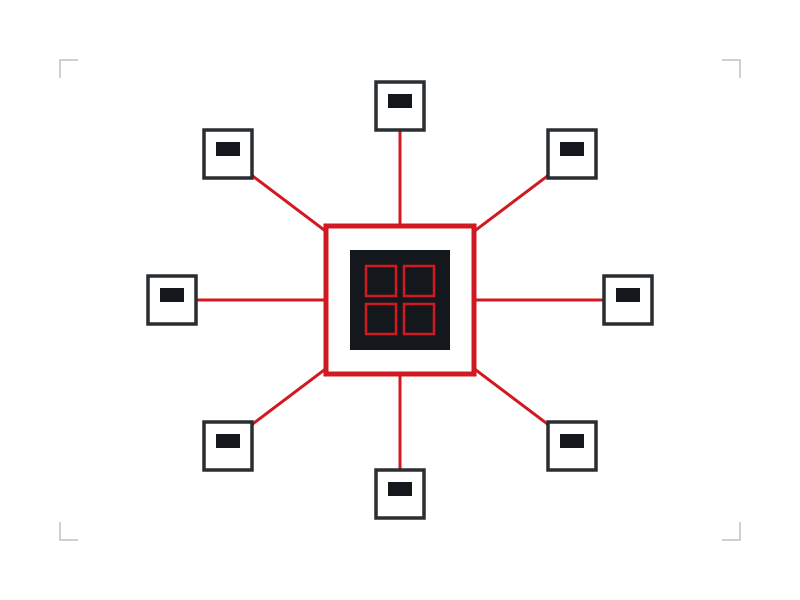
The centralized power architecture: 600 kW to 1.2 MW of dynamic power management feeding up to 12 satellite dispensers from one hub.
ExploreShare the vehicles, the site, the schedule, and the available power. Volatus will configure the system around them.